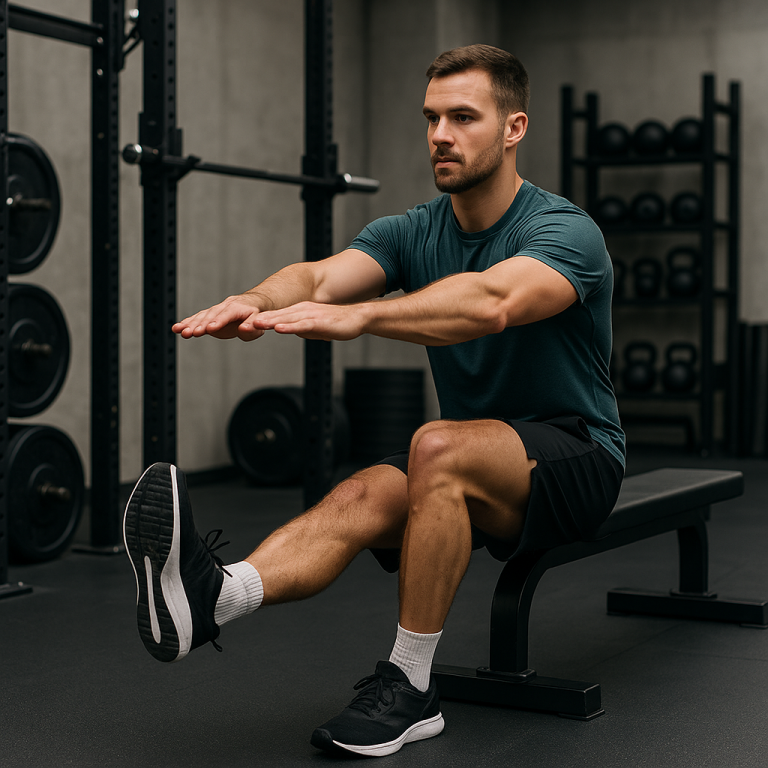
Functional fitness is more than just working out. It’s about training your body to move efficiently and effectively in the real world. Your body must carry you through the day, most of which may be spent sitting at a desk, in a car, or watching TV, then into movement, which may involve lifting or carrying. To stay resilient, it’s not enough to look good in the mirror; you need to perform well, recover well, and remain functional.
The research on functional training backs this up. A systematic review found that functional training significantly improves speed, strength, power, balance, and agility. Another meta-analysis found high-intensity functional training (HIFT) improved strength, power, speed, endurance, and agility in healthy individuals. And beyond sport, functional training improves mobility, stability, balance, and activities of daily living.
In short, if you want your body to be better prepared for life, not just the gym, you need a functional foundation. Below are five functional movements considered to be most impactful that everyone can do for longevity.
- The Deadlift (Hip Hinge Lift)
What the movement is:
This is the foundational hip hinge: bending at the hips, not merely the knees, keeping a neutral spine, lifting from the floor to standing. It may be performed with a barbell, kettlebell, dumbbells, or any suitable tool; either way, the core pattern remains the same.
Why it’s a priority:
- It mirrors one of the most frequent real-life tasks: bending, picking something up, and standing it back up.
- Develops the posterior chain (glutes, hamstrings, lower back), which is often neglected in seated professions.
- Big “bang for your movement” as it integrates core, legs, back, grip,and posture.
- Research supports the idea that functional training improves strength and power across the board.
- While not always singled out, the biomechanical importance of the hip hinge is well documented (for example, squats vs hinges, loading patterns).
Key coaching tips:
- Feet roughly hip-width (or slightly wider), implement over mid-foot.
- Hips back, chest tall, spine neutral.
- Grip the implement, brace your core and glutes.
- Drive through the midfoot heel, stand up by extending hips and knees, finish tall (don’t over arch).
- Lower with control: hips back, maintain neutral spine.
- Key cues: “Hips back”, “Push the floor away”, “Stand tall at top”.
Why it’s relevant:
Most people sit for longer periods of time than is recommended. This causes the posterior chain to weaken, hip hinges erode, and back and glute muscles fatigue. By training the hinge, you improve your ability to lift safely, stand strong, reduce the risk of back pain, and support better posture and movement throughout the day.
- Squat
What the movement is:
The squat is a foundational movement: standing to sitting (or squat depth), then back to standing. Variations include bodyweight, goblet, front squat, back squat, goblet etc. The key is loading the lower body in a multi joint, multi muscle pattern.
Why it’s a priority:
- Squatting under load (or even bodyweight) engages the legs, glutes, core, back and is key for posture, joint health, movement efficiency.
- Research: Squats are described as a “functional exercise” that can boost injury prevention, strengthen the core and improve balance and posture.
- Squats reproduce many daily movements: getting up and down, stepping, carrying, and stabilising. A commentary noted that squats are essential for activities of daily living.
- Helps preserve mobility and joint integrity, important when time is limited.
Key coaching tips:
- Feet roughly shoulder-width (or slightly wider, depending on hip mobility), toes slightly turned out if comfortable.
- Engage core, chest up, back neutral.
- Sit hips back and down as though onto a chair, knees tracking over toes (but not excessively), depth as mobility allows (ideally thighs at least parallel).
- Drive up through heels mid-foot, finish standing tall, glutes engaged at top.
- Key cues: “Sit back and down”, “Knees track over toes”, “Chest stays tall”, “Stand up strong”.
Why it’s relevant:
Squats build lower-body capacity, support standing posture, stair climbing, lifting from seated positions, and reduce risk of falls and leg fatigue. For sedentary workers, counteracting sitting posture with active leg hip motion is key.
- Walking Lunges (or Static/Forward/Reverse Lunges)
What the movement is:
A lunge involves stepping forward (backward or laterally) so that one leg is in front, bending the rear leg, torso stays upright, then pushing back (or stepping through) to standing or stepping forward for a walking variant. Walking lunges add the forward step between repetitions.
Why it’s a priority:
- Unilateral (single-leg) training forces each limb to work independently: great for balance, stability, and reducing asymmetries.
- Mimics many real-life tasks: stepping into a car, climbing steps, walking forward while carrying something, and changing direction.
- Research: One study with middle-aged women doing lunge training (on stable vs unstable surface) improved lower extremity muscle mass function and balance.
- Helps develop hip, leg strength, control, and stability, particularly beneficial when you carry bags, move on uneven terrain, or walk long distances.
Key coaching tips:
- Start standing tall. Step one foot forward (or back for reverse lunge).
- Lower until the front thigh is roughly parallel to the floor (or comfortable depth), front knee above ankle (not collapsing), back knee lowers toward the floor.
- Torso remains upright, core braced.
- Push up through the front heel, step through (for walking variant) or return.
- For walking: alternate legs and move forward.
- Variations: hold dumbbells/kettlebells to increase load; reverse lunge; side lunge to train different planes.
Why it’s relevant:
Walking lunges help build leg and hip capacity that supports walking, transitioning from seated to standing, stepping off curbs, even getting up and down from lower surfaces. They address stability and control, which is often overlooked yet critical for injury prevention and movement efficiency.
- Carry Based Movements (Farmer’s Walk, Suitcase Carry)
What the movement is:
Carrying a weight in one or both hands and walking, that’s it. Simple but highly effective. Variations include farmer’s walk (both hands), suitcase carry (one side), rack carry (weight held at shoulder), overhead carry (weight overhead). The key is to hold and carry while maintaining posture, core stability, gait control.
Why it’s a priority:
- Directly mirrors daily life: carrying bags, briefcases, children, equipment. Training the carry builds the body’s ability to stabilise load while moving.
- It challenges grip strength, core bracing, posture and gait under load: all of which are critical in functional fitness.
- While the formal research on “carries” per se is more limited, functional-training literature emphasises load bearing walking as useful for full body integration and posture stability.
- For busy professionals who often carry briefcases, devices, travel, or move quickly between environments, the carry builds resilience in the trunk and upper body as well as lower.
Key coaching tips:
- Select suitable weights (dumbbells or kettlebells) that challenge but don’t compromise form.
- Stand tall, core engaged, don’t shrug the shoulders.
- Walk a set distance (20-30 m) or for a set time (30-60 s), focus on stable posture, no excessive leaning, steady breathing.
- Use variations: one-hand (suitcase) to train lateral stability; rack carry to train front-loaded posture; overhead carry for shoulder/trunk stability.
Why it’s relevant:
This is one of the most directly “translatable” exercises: carrying loads while walking, maintaining posture while loaded, resisting fatigue in the grip and trunk, all of which matter when you’re moving through work, travel or life tasks. It builds functional strength that matters beyond the gym.
- Core Stability /Core Work (Planks, Pallof Press, Anti-Rotation)
What the movement is:
Here we shift from “moving through the movement” to “resisting movement”. The core is holding you stable while limbs move or loads shift. Examples: front plank, side plank, bird-dog, cable or band anti-rotation press (Pallof press), or anti-extension holds (ab wheel, plank variations). These are not “sit-ups” they are functional core patterns that support balance, posture, load transfer, and aid injury prevention.
Why it’s a priority:
- A strong core that controls and resists unwanted motion is foundational. Without it, even good leg hip strength is undermined by poor posture or trunk instability.
- In real life you often have to resist motion (e.g., you carry something while someone else moves it, or you brace while reaching).
- Research: Functional training is linked to improvements in core strength, mobility, and coordination,n and the literature emphasises the importance of core control in functional strength.
- For professionals who spend time seated, travel, carry loads and shift posture: core stability means better posture, less fatigue, fewer aches.
Key coaching tips:
- Front Plank: On elbows, forearms or hands, body in a straight line from head to heels, core braced, glutes engaged, hold for time.
- Side Plank: On one side, body straight, hips off the floor, may add leg lift, hip drop, or reach to increase challenge.
- Pallof Press: Anchor a band or cable at chest height, stand side on, hold the handle at chest, step out to create tension, press the handle straight in front of chest, hold briefly, and bring back.
- Progressions: increase hold time, add movement (e.g., plank shoulder tap), unstable surfaces, and loaded planks.
Why it’s relevant:
A stable core means better posture (especially after sitting for long periods), lower risk of back, hip, and shoulder fatigue, better transfer of force in all other movements, and improved resilience to the small but cumulative loads of daily life (carrying bags, holding devices, reaching overhead). Training core stability is an investment in your health.
Integrating the Five into a Balanced Functional Fitness Routine
Here’s how you might structure a weekly routine that incorporates all five movements — for intermediate/experienced trainees. Beginners should scale loads, volumes, and focus on technique first.
Why These Movements from a Functional and Research Perspective
By selecting these five movements, you cover a broad spectrum of functional demands and movement patterns:
- Hinge (deadlift): lifts from the floor, strengthens the posterior chain, and supports safe bending and lifting.
- Squat: lower body strength, standing to sitting transitions, multi-joint integration, core control.
- Lunge (unilateral lower body): stepping, balance, single-leg control, movement efficiency in walking.
- Carry (hold and walk): load communication through body, posture under load, trunk stability, grip, and real-life carry tasks.
- Core stability / anti-movement: the trunk control that underpins all other movements; resisting unwanted motion is as critical as moving.
From a research standpoint, functional or high-intensity functional training programmes that include compound, multi-joint, real-life oriented movements show significant improvements in strength, power, speed, balance, agility and endurance. The literature also ties functional training to improved mobility, stability and better performance in activities of daily living. By combining these five movements, you’re creating a balanced, efficient programme that supports movement quality, capability, and resilience — not just looking strong but being strong.
From a coaching perspective, the message is simple: choose quality over quantity; make each movement count; align the movement with life outside the gym; monitor postural, mobility, and recovery issues.
Safety, Progression, and Common Mistakes
Safety considerations:
- Form first: especially for deadlift and squats. The back must remain neutral, and the hips, ankles and knees must move in alignment.
- Warm up well: hips, hamstrings, glutes, thoracic spine, and shoulders.
- For carries: maintain upright posture, avoid leanin,g and avoid grip failure.
- For lunges: avoid knee collapsing inward, ensure front knee doesn’t move too far over the toes (depending on mobility) and maintain an upright posture.
- For core stability: maintain alignment in planks, anti-rotation; don’t just “hold time” with sagging hips or uncontrolled posture.
Progression suggestions:
- Master body weight or light load version first for hinge, squat, lunge and carry.
- Once form is consistent, increase loads (deadlift and squats), increase distance and or time (carries), increase steps, time or weight (lunges), increase hold time and or complexity (core).
- Introduce variation: single-leg deadlift, reverse lunge, side lunge, suitcase carry single hand, overhead carry, plank with row, side plank with leg lift.
Common mistakes to avoid:
- Deadlift: rounding back, hips rising too fast, lack of glute drive, lifting too heavy, too soon.
- Squat: knee valgus, heels coming up, leaning too far forward, shallow depth, limiting benefit.
- Lunge: uneven step length, torso tilting, knee tracking poorly, insufficient control.
- Carry: letting weight swing, leaning to one side, loose core, too heavy, too soon.
- Core stability: holding planks with hips sagging, doing anti-rotation with momentum, ignoring core during leg, arm movement.
Functional fitness is not a trend: it’s a smart way to train so that your body is capable, resilient, and efficient for life beyond the gym.
Because research supports functional training’s ability to improve strength, power, speed, balanc,e and agility, and because these movements directly map to real-life tasks, they’re particularly suited for professionals, executives, coache,s and anyone who wants to move well and sustain performance.
If you’re ready to step up your training (for yourself or your clients), here’s your action plan:
- Select one of the five movements to focus on this week — practice form, video yourself, fix technique.
- Integrate it into your next session (even if only 10 minutes).
- Commit to 2-3 sessions per week of a routine that includes all five (even if scaled).
- Track how improvements in the gym transfer into your life: better posture at your desk, easier stair climbs, less fatigue when travelling, and improved balance.
The key is good form, so if you are not sure you are doing the movements to their optimum, then book a session so we can assess and tweak if necessary.